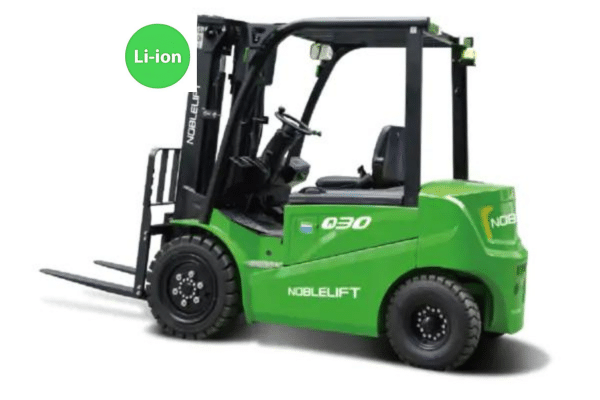
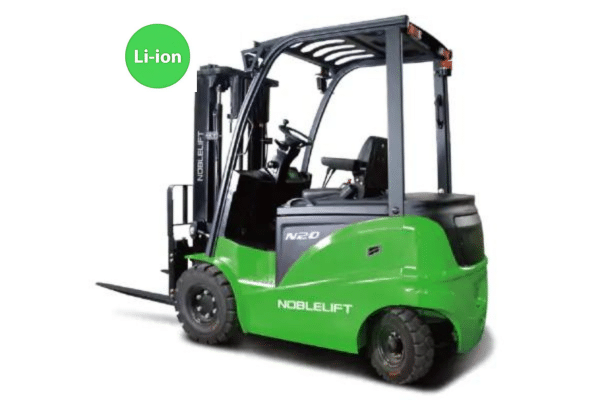
The article is written to guide warehouse managers and businesses located in Chatham, Ontario, in making an informed decision when selecting a lithium-ion 4-wheel forklift. It emphasizes the unique benefits and considerations of lithium-ion technology in forklifts, tailored to the specific needs and context of operations in this region.
Introduction:
Warehouses in Chatham are the beating heart of the local industry, with countless goods moving through them daily, requiring efficient and reliable material handling equipment. In recent years, the shift towards sustainable and high-performance machinery has seen lithium-ion 4-wheel forklifts rise in popularity. These powerhouses offer numerous advantages over traditional lead-acid battery-powered or internal combustion counterparts. However, the selection process is not without its complexities. Choosing the right lithium-ion 4-wheel forklift is critical to optimizing operational efficiency, ensuring safety, and managing costs. In this article, we delve into the vital aspects you need to consider to make the best choice for your warehouse in Chatham.
Assess Your Warehouse Layout
- Space Constraints: Measure aisle widths and ceiling heights to ensure the forklift can operate effectively within your warehouse.
- Floor Conditions: Consider the type of flooring and its condition; forklifts may require specific tire types.
- Operating Environment: Account for temperature, humidity, and cleanliness, as they can affect forklift performance.
- Maneuverability: Choose models with a better turning radius for tighter spaces.
- Load Capacity: Understand the average and maximum load weights to select a forklift with appropriate lift capacity.
- Racking System: Ensure the forklift’s lift height is compatible with your racking system.
- Traffic Flow: Evaluate the flow of pedestrian and forklift traffic to minimize congestion and improve safety.
Evaluate the Frequency and Intensity of Use
- Shift Duration: Consider the length of your shifts and battery life to avoid mid-shift recharging.
- Daily Workload: Match the power output and endurance of the forklift to your daily load-handling requirements.
- Charging Infrastructure: Ensure you have adequate charging stations and space for battery maintenance.
- Battery Exchange Systems: For continuous operations, look at forklifts with quick battery exchange features.
- Duty Cycle: Understand the duty cycle to ensure the battery’s longevity matches your operational demands.
- Opportunity Charging: Determine if the forklift allows for opportunity charging during breaks without damaging the battery.
Understand Lithium-Ion Technology
- Energy Efficiency: Recognize the higher energy efficiency of lithium-ion batteries compared to lead-acid.
- Maintenance Requirements: Appreciate the low maintenance needs, as there’s no need for watering or equalizing charges.
- Lifecycle Cost: Consider the total cost of ownership, realizing lithium-ion batteries often have a higher upfront cost but lower long-term expenses.
- Battery Lifespan: Note that lithium-ion batteries typically have a longer lifespan, resulting in fewer replacements.
- Fast Charging: Look for fast charging capabilities to minimize downtime.
- Safety Features: Prioritize forklifts with built-in safety features to protect against overcharging or deep discharge.
- Environmental Impact: Understand the environmental benefits, such as no gas emissions and sustainable disposal.
Calculate Total Cost of Ownership
- Initial Investment: Factor in the purchase price of the forklift and the battery.
- Energy Costs: Estimate the savings in electricity costs over the life of the battery.
- Maintenance Fees: Account for reduced maintenance costs associated with lithium-ion batteries.
- Downtime Costs: Consider productivity gains from reduced downtime.
- Resale Value: Investigate the possible resale value of the forklift and battery technology.
- Warranty Terms: Analyze warranty length and coverage to predict future expenses.
- Financing Options: Explore available financing or leasing options to spread out the initial investment.
Prioritize Operator Comfort and Ergonomics
- Seat Design: Look for adjustable and cushioned seats to enhance operator comfort.
- Controls Layout: Ensure controls are intuitively placed and easy to operate.
- Visibility: Choose models with good visibility around the mast and overhead guard.
- Cabin Space: Verify that the cabin offers ample space for the operator to move comfortably.
- Noise Levels: Select forklifts with lower operational noise for a better working environment.
- Vibration Damping: Check if the forklift has features to minimize vibrations during operation.
- Accessibility: Assess how easy it is for operators to enter and exit the forklift cabin.
Focus on Safety Features
- Stability Systems: Opt for forklifts with advanced stability control to prevent tipping over during maneuvers.
- Warning Systems: Ensure the forklift has audible and visual warning devices for safe operation.
- Speed Control: Look for forklifts with adjustable speed settings to match different operational areas.
- Emergency Stops: Check the accessibility and functionality of emergency stop buttons.
- Operator Presence Systems: Confirm that the forklift won’t operate without the presence of a certified operator.
- Fall Protection: Examine the overhead guard for robust protection against falling objects.
- Load Backrest Extension: Ensure there’s a backrest to secure loads from shifting backward.
Check for Customization and Attachments
- Side Shifters: Consider the utility of attachments like side shifters for precise load placements.
- Mast Options: Explore different mast options for the specific height requirements in your warehouse.
- Fork Positioners: Assess the need for adjustable fork positioners to handle a variety of pallet sizes.
- Clamps and Rotators: Look at specialty attachments for handling non-palletized goods or for rotating loads.
- Scale Integration: Investigate the availability of integrated scales for on-the-go weight measurement.
- Data Terminals: Examine options for mounting data terminals or computers for real-time inventory management.
- Custom Paint and Decals: Check if the manufacturer offers custom paint or decals to match your company branding.
Investigate Support and Service Availability
- Dealer Proximity: Choose a dealer in Chatham or nearby for easily accessible service and support.
- Parts Availability: Ensure quick availability of replacement parts to minimize downtime.
- Training Programs: Find out if the dealer offers operator training programs.
- Service Contracts: Consider the option of service contracts for regular maintenance.
- Customer Support: Look for strong customer support with good communication and problem-solving capabilities.
- Warranty Service: Verify the process for warranty service claims is straightforward and efficient.
- Fleet Management: Explore if there are fleet management services to optimize your forklift operations.
Review Environmental Considerations
- Emissions: Acknowledge the absence of emissions with lithium-ion forklifts, providing cleaner air for operators.
- Energy Consumption: Evaluate the energy consumption metrics to ensure energy-efficient operations.
- Recyclability: Check the recyclability of the forklift and battery components.
- Noise Pollution: Take into account the reduced noise pollution, which contributes to a better working environment.
- Cooling Requirements: Understand that lithium-ion batteries may not require active cooling systems, thus saving energy.
- Sustainability Goals: Align your choice with your company’s sustainability goals and initiatives.
- Regulatory Compliance: Ensure your forklift choice meets all local and federal environmental regulations.
Trial and Demos
- On-site Demonstrations: Request an on-site demonstration to see how the forklift performs in your actual environment.
- Operator Testimonials: Speak to operators who have used the models you are considering for their insights.
- Trial Periods: Inquire about trial periods that allow you to test the forklift’s compatibility with your operations.
- Competitor Comparisons: Compare several models side-by-side for a comprehensive understanding of their differences.
- Performance Metrics: Gather data on performance metrics during the demo to aid in decision-making.
- Service Response: Observe the responsiveness of the service team during the trial period.
- Feedback Loop: Establish a feedback loop with your team to evaluate the forklift’s performance, comfort, and ease of use.
FAQ
Conclusion:
Choosing the right lithium-ion 4-wheel forklift for your Chatham warehouse involves careful consideration of many factors. From your specific operational needs and the advantages of lithium-ion technology to ergonomics and environmental impact, each point plays a vital role in making an informed decision. By following the guidelines outlined above, you can select a forklift that will not only meet your current needs but also adapt to future challenges, ensuring a smart investment that contributes to the overall productivity and sustainability of your operations.
Ready to elevate your warehouse operations with the ideal lithium-ion 4-wheel forklift?
- Name: Liftway
- Address: 479 Brant County Rd 18, Brantford, ON. Canada N3S 0H4
- Phone: (519) 759-5590
- Email: sales@liftway.ca
- Website: Visit www.liftway.ca
“Take charge of your material handling needs and drive your business forward with Liftway—where performance and reliability lift you up.”