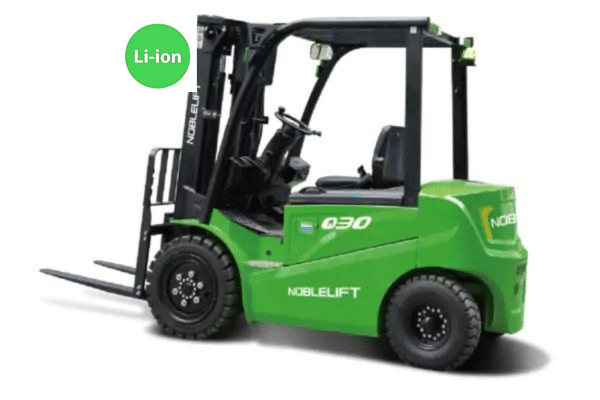
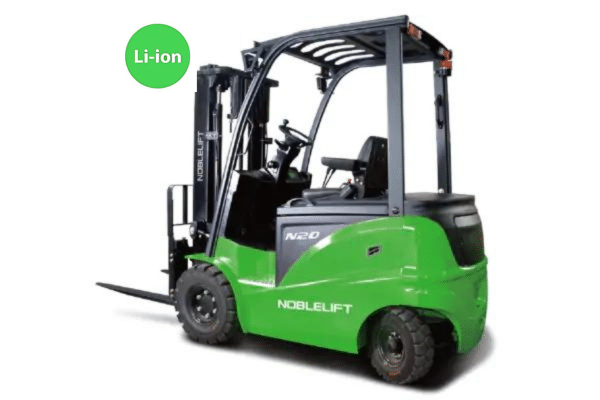
Power Without Compromise: How Noblelift is Electrifying the Untamed Outdoors.
Premise
The material handling industry is currently standing on the precipice of its most significant technological evolution since the invention of the internal combustion engine. For decades, a distinct psychological and physical line divided the forklift world: electric machines were delicate tools for the flat, clean floors of indoor warehouses, while diesel and propane (IC) forklifts were the rugged beasts of burden for the outdoors. That line is now blurring. This article explores the “Green Shift” in heavy-duty material handling, specifically focusing on how Lithium-Iron Phosphate (LiFePO4) technology—championed by innovators like Noblelift—is cracking the code for Rough Terrain (RT) applications. We will examine how the convergence of high-voltage architecture, waterproofing, and opportunity charging is rendering the internal combustion engine obsolete, even in the mud, snow, and gravel of the construction yard.
Introduction: The Last Bastion of Diesel
For the better part of a century, the sensory experience of a lumber yard, a construction site, or an aggregate facility has been defined by the rumble of internal combustion engines and the acrid smell of exhaust. The rough terrain forklift is the undisputed workhorse of the outdoor world. Unlike its cushion-tired warehouse cousins, the rough terrain forklift must contend with uneven gradients, loose gravel, thick mud, snow, and driving rain. It requires immense torque to climb steep ramps while carrying thousands of pounds, and it demands a rugged durability that standard electronics traditionally could not provide.
Because of these demanding requirements, the outdoor market has been the last bastion of diesel and LPG dominance. The skepticism regarding electric power in these environments was historically well-founded. Early lead-acid battery technology was heavy, prone to voltage drops as the charge depleted, and fundamentally allergic to water and vibration. An operator could not afford for a machine to die halfway up a muddy hill, nor could they wait eight hours for a battery to recharge in the middle of a double shift.
However, the narrative is changing. We are witnessing a paradigm shift driven by the maturation of Lithium-ion technology. This is not merely an environmental choice; it is a performance evolution. Manufacturers like Noblelift are not just swapping engines for batteries; they are reimagining the chassis and the powertrain to utilize high-voltage lithium systems that offer torque and traction superior to their fossil-fuel counterparts. The Green Shift is no longer about sacrificing power for the planet; it is about achieving peak efficiency in the most hostile environments.
1: The Engineering of Noblelift’s Lithium-Ion Technology
Noblelift has emerged as a vanguard in the electrification of material handling, specifically through their aggressive integration of Lithium-Iron Phosphate (LiFePO4) technology. Unlike legacy manufacturers who attempted to retrofit lead-acid chassis with lithium packs, Noblelift approaches the engineering of their electric rough terrain vehicles with an “electric-native” mindset. The core of this disruption lies in the chemistry. LiFePO4 is distinct from the lithium-ion batteries found in consumer electronics (like Cobalt-based chemistries) because it is inherently more stable, less prone to thermal runaway, and capable of enduring the violent vibrations associated with rough terrain work. Noblelift’s implementation of this technology addresses the power density vs. weight ratio, ensuring that the forklift retains the necessary counterweight stability without being burdened by the inefficiency of an engine block.
- High Voltage Efficiency (80V Systems): Noblelift utilizes high-voltage systems (typically 80V) for their rough terrain trucks. In electrical engineering, higher voltage allows for lower amperage to achieve the same power output. Lower amperage results in significantly less heat generation within the wiring and motors. This is critical for outdoor work where the machine might be pushing through mud or climbing inclines, actions that would overheat lower-voltage systems.
- Zero-Maintenance “Sealed” Chemistry: The LiFePO4 battery packs are completely sealed units. Unlike lead-acid batteries that require regular watering, specific gravity checks, and terminal cleaning to prevent corrosion, Noblelift’s batteries require zero daily maintenance. This is a game-changer for outdoor sites where dust, pollen, and debris usually foul open battery systems.
- Thermal Stability and Safety: Rough terrain work is physically jarring. The chemical structure of Iron Phosphate is far more robust against impact and puncture than other lithium chemistries. Furthermore, the Battery Management System (BMS) actively monitors cell temperature, ensuring the pack operates safely whether it is -20°C in a Canadian winter or +40°C on a summer tarmac.
- Opportunity Charging: This feature eliminates the need for battery swapping. A Noblelift unit can accept a high rate of charge during short breaks. A 15-minute plug-in during a coffee break or a 30-minute charge during lunch can pump enough energy into the unit to keep it running through a multi-shift operation, mirroring the “refuel and go” convenience of diesel.
2: Penetrating the Outdoor Market – Performance Under Pressure
The true test of any rough terrain forklift is not on a spec sheet, but in the mud. How does Noblelift’s technology translate to the physical realities of a job site? The penetration of the outdoor market is driven by the realization that electric motors actually possess superior performance characteristics for off-road driving compared to IC engines. The primary advantage is Instant Torque. An internal combustion engine has a torque curve; it must rev up to reach its peak power. If a diesel forklift is stuck in a muddy rut, the operator has to rev the engine, slip the transmission, and hope for traction. An electric motor, by contrast, delivers 100% of its available torque at zero RPM. This allows for incredibly precise, high-power control at creeping speeds, which is exactly what is needed to navigate rocky or soft terrain without spinning the wheels and digging a deeper hole.
- Ingress Protection (IP Ratings): One of the biggest fears regarding electric equipment outdoors is water. Noblelift rough terrain forklifts are designed with high IP ratings (typically IP54 for the truck body and IP65 for motors/controllers). This means they are effectively sealed against dust ingress and low-pressure water jets (rain). These machines are built to be washed down and operated in wet conditions without risk of short-circuiting.
- High Ground Clearance & Pneumatic Tires: The chassis design retains the essential physical geometry of a diesel rough terrain unit. This includes high ground clearance to pass over lumber, rocks, and debris, as well as large pneumatic or solid pneumatic tires with aggressive tread patterns to absorb shock and provide traction in loose soil.
- Center of Gravity Optimization: In a diesel truck, the engine is a heavy block of metal sitting high in the frame. In a Noblelift electric truck, the lithium battery acts as part of the counterweight and is often situated lower in the chassis. This lowers the center of gravity, providing superior stability when cornering or lifting heavy loads on uneven ground.
- Gradeability and Holding Power: These machines are engineered to match or exceed the gradeability of diesel units, capable of climbing steep ramps fully loaded. Furthermore, the electromagnetic braking systems prevent “roll-back” on inclines, adding a layer of safety that mechanical handbrakes on older diesel units often lack.
3: The Economics of the Green Shift (Total Cost of Ownership)
While the environmental benefits are clear, the construction and industrial sectors are driven by the bottom line. The “Green Shift” would not be happening if it did not make financial sense. The economic argument for Noblelift’s electric rough terrain forklifts relies on a Total Cost of Ownership (TCO) model rather than just the initial purchase price. It is an inescapable fact that the upfront cost of a lithium-ion rough terrain forklift is generally higher than a comparable diesel unit. However, the operating costs diverge immediately after purchase. Diesel fuel is expensive and prices are volatile. Electricity, by comparison, is cheap and price-stable. Furthermore, the complexity of a diesel engine—with its hundreds of moving parts, fluids, filters, belts, and emissions systems—creates a constant drip of maintenance costs. An electric powertrain has a fraction of the moving parts.
- Fuel vs. Electron Arbitrage: Replacing a daily diesel bill (which can range from $50 to $100 depending on usage and market rates) with a nominal electricity bill (often $5 to $10) creates massive operational savings. This variance allows companies to recoup the higher purchase price within 18 to 24 months in high-use applications.
- Elimination of Preventative Maintenance: There are no oil changes, no transmission fluid flushes, no radiator coolants to leak, no starter motors to burn out, and no alternators to fail. The maintenance schedule is drastically simplified, focusing primarily on tires, hydraulic fluids, and greasing points.
- Component Longevity: Vibration is the enemy of machinery. Internal combustion engines create constant vibration that loosens bolts, cracks welds, and wears out components over time. The smooth operation of an electric motor extends the structural life of the forklift, ensuring higher resale value.
- Government Incentives and Tax Breaks: Many governments are actively encouraging the switch to zero-emission equipment. Buyers can often take advantage of grants, rebates, or accelerated capital cost allowance (CCA) tax structures that are unavailable for diesel equipment purchases.
4: Regulatory Compliance and Operator Well-being
The “Green Shift” is also being accelerated by external pressures, both regulatory and human. Governments worldwide are tightening emission standards for off-road diesel equipment (such as Tier 4 Final and Stage V standards). These regulations have made diesel engines more expensive, more complex, and more prone to failure due to sensitive sensors and urea (AdBlue) systems. Noblelift’s electric units bypass this regulatory headache entirely. Beyond the regulations, there is the human element. Operator retention is a significant challenge in the material handling industry. A diesel rough terrain forklift is a harsh office: it is loud, it vibrates intensely, and it emits exhaust fumes that can be nauseating, even outdoors.
- Noise Pollution Reduction: Electric forklifts are nearly silent. This is a massive advantage for residential construction zones, event setups, or work near schools and hospitals where noise ordinances might otherwise halt work. It also allows for better communication between the operator and ground crew, improving safety.
- Reduction of Whole-Body Vibration: The smooth delivery of electric power significantly reduces the vibration transmitted through the seat to the operator’s spine. Reducing this physical stress leads to less fatigue, fewer chronic back injuries, and a happier, more productive workforce.
- Elimination of Tailpipe Emissions: Even in outdoor environments, workers often operate in semi-enclosed spaces or congregate around machinery. Eliminating diesel particulate matter creates a healthier job site and removes the need for expensive exhaust scrubbers or DPF (Diesel Particulate Filter) regeneration downtime.
- Meeting ESG Goals: Corporate responsibility is no longer a buzzword; it is a requirement for bidding on many large contracts. Utilizing zero-emission Noblelift equipment helps companies meet their Environmental, Social, and Governance (ESG) targets, giving them a competitive edge in the bidding process.
FAQ
Conclusion
The era where “Electric” meant “Weak” is over. The penetration of Lithium-ion technology into the rough terrain market marks a turning point in industrial history. Noblelift has successfully demonstrated that you do not need to burn fossil fuels to achieve the power, torque, and durability required for the toughest jobs on earth.
By combining the inherent advantages of electric motors—instant torque and silence—with the robust chemistry of LiFePO4 batteries and rugged chassis design, the gap between indoor and outdoor material handling has closed. For business owners, the shift offers a rare “win-win-win” scenario: lower operating costs, superior machine performance, and a reduced environmental footprint. As infrastructure improves and battery density continues to rise, the rumble of the diesel engine on the construction site will likely become a relic of the past, replaced by the silent efficiency of the Green Shift.
The future of rough terrain is not just electric; it is efficient, powerful, and here today.
Take Action Today
Ready to electrify your fleet and experience the power of Noblelift? Don’t let old habits cost you money and performance. Contact the experts at Liftway to discuss your specific rough terrain needs.
For more information, contact us:
Brantford Location
- Address: 479 Brant County Road 18, Brantford, ON, Canada, N3S 0H4
- Phone: (519) 759-5590
- Email: sales@liftway.ca
- Website: Visit www.liftway.ca
Chatham Location
- Address: 54 Siemens Dr. Chatham, Ontario N7M 6M5
- Phone: (519) 354-1526
- Email: sales@liftway.ca
Website: www.liftway.ca/liftway-chatham-forklifts-sales-service/